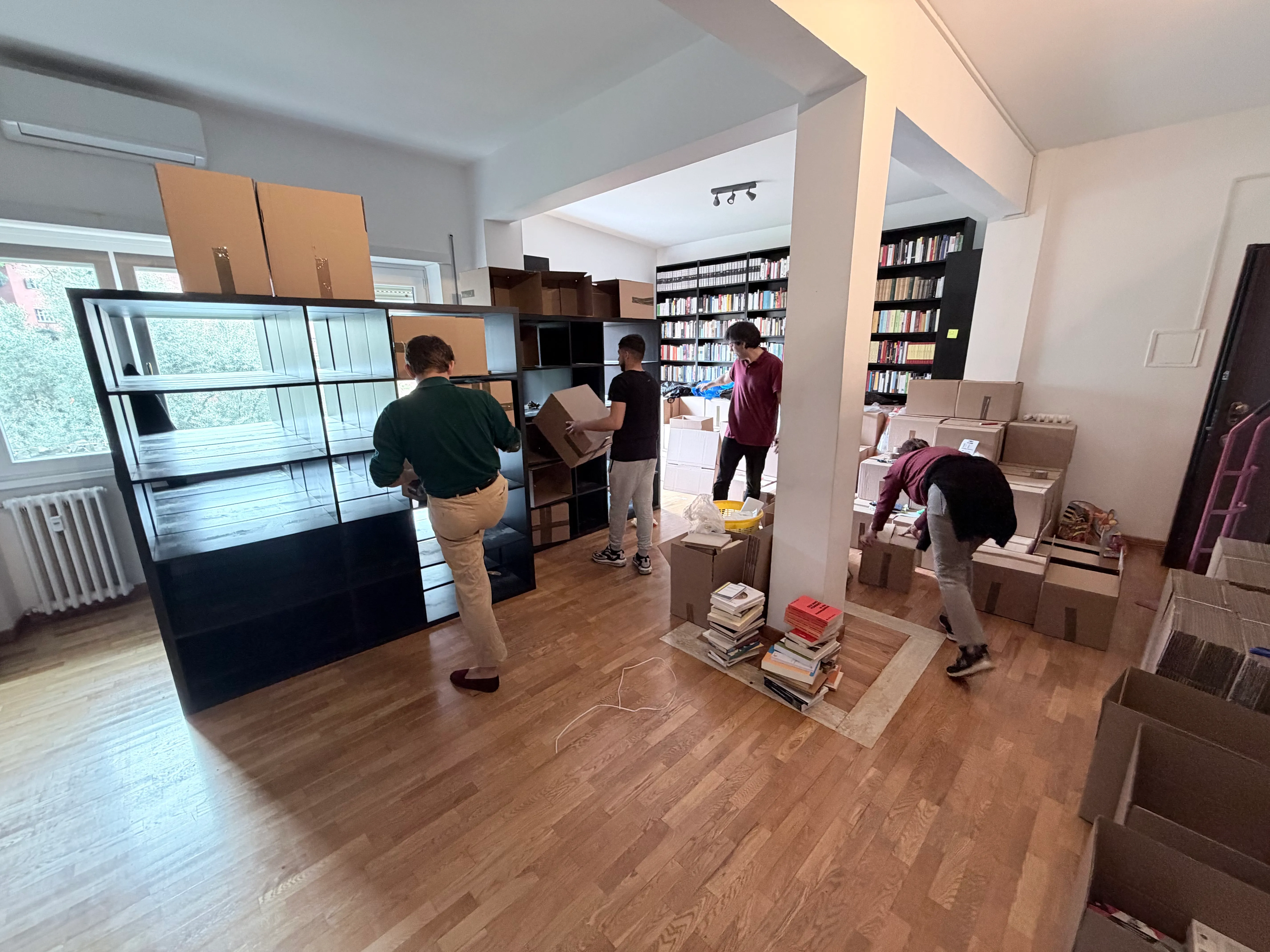
It may happen in your life that some of your friends have to move to a new place, and they ask you to help them moving some books. You may be asked to move a box of books, or maybe a whole bookshelf.
What do you do if you’re asked to move a few thousand books?
Yup, that’s it: ~26k books to be moved out.
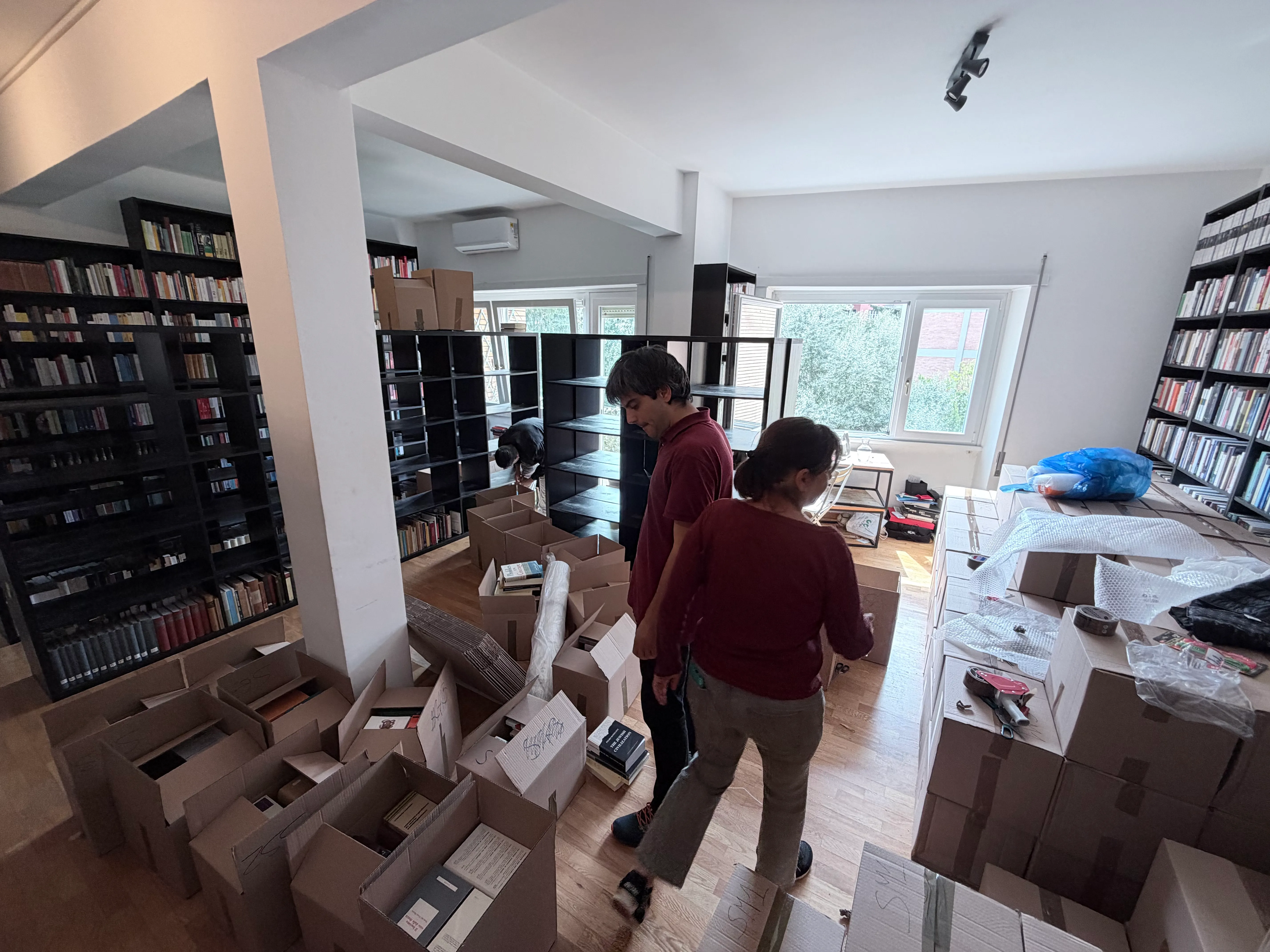
So, we could manage to pack around 6 thousand books in a day, packing them in boxes with around 30 books each. The van we rented can move all of the boxes in a few trips (3 probably).
Let’s do some math to calculate our effective data rate we could archieve:
- The average book has ~75-125 thousand words, let’s stay on 100k as a guessed average.
- The average word has 5 characters (from a quick search online I get 4.7 for English, I’d say books in other European languages would be higher on this, 5 seems reasonable), so we have 500k characters per book on average.
- That’s 15k characters per box and 900k characters per trip.
- We packed 240 boxes in 8 hours, if we were moving them in the meantime (which we unfortunately didn’t manage to do and had to postpone to the next day, but we’ll cheat on this), we would have moved at least 3 trips in 12 hours
- so 2.7M characters in 12 hours
- 2.7M / (12 60 60) is around 62.5k characters per second.
- Encoding this in UTF-8, we can assume 1 byte per character on average, so we have an effective data rate of around 62.5kB/s.
That’s better than a 56k dial-up modem!
Of course this is a rough estimate and depends on many factors, including (road) network congestion… 🌚
Next step will be to create a proper catalog of all the books, to organize and manage them better. For this we’ll happily accept help from our friend Claude.
So let me introduce you to: ShelfScan
It’s simple, it’s open source, and does just what we need: quick scan a book’s ISBN and add it to a catalog with all the relevant information (title, author, publisher, etc).
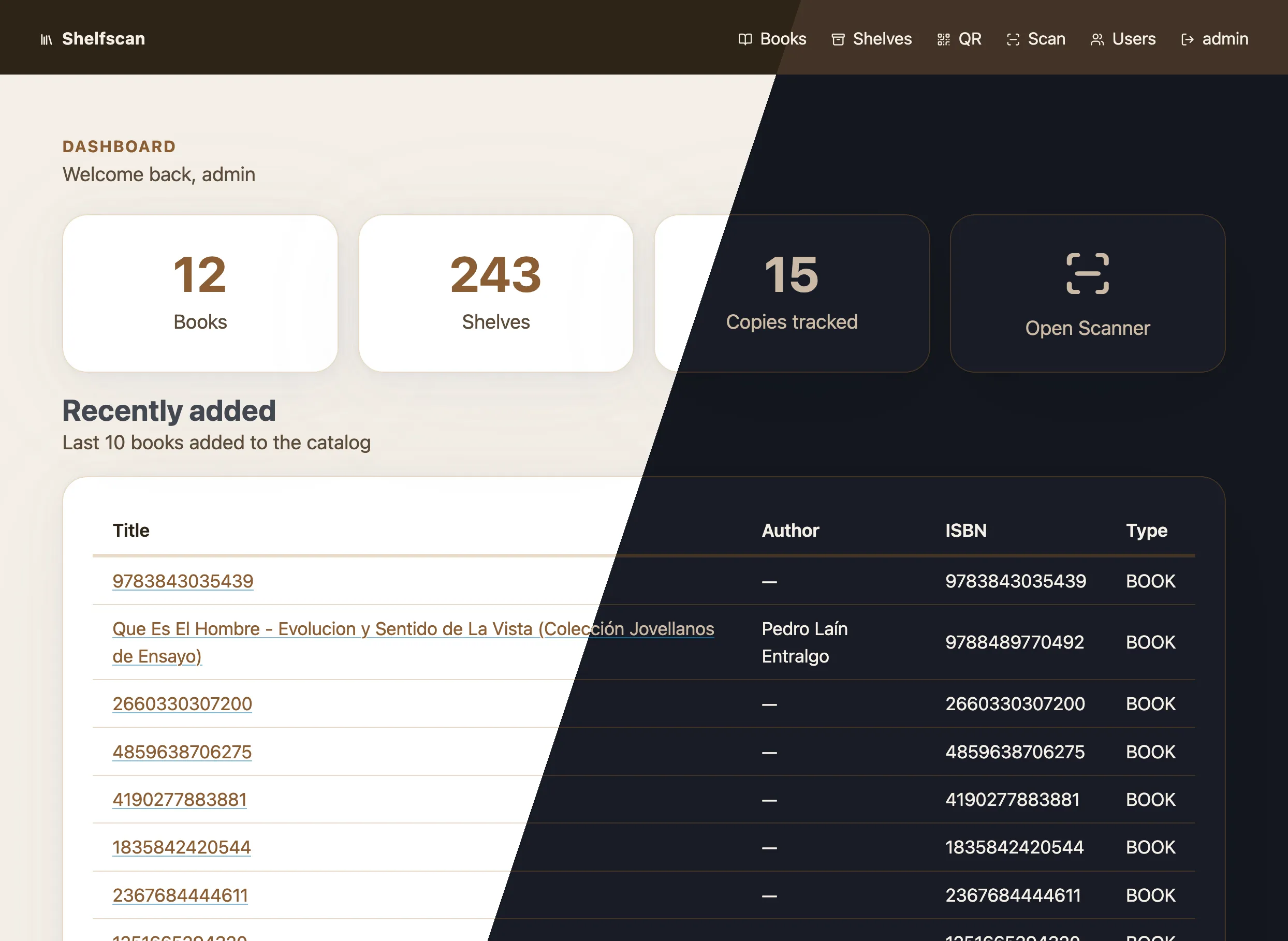
I’m going to use QR codes to identify the shelves quickly, so once each shelf has a QR code attached to it, we can quickly scan the books and assign them to the correct shelf in the catalog.
I’ll write a follow-up post about the cataloging process soon, now back to work!